
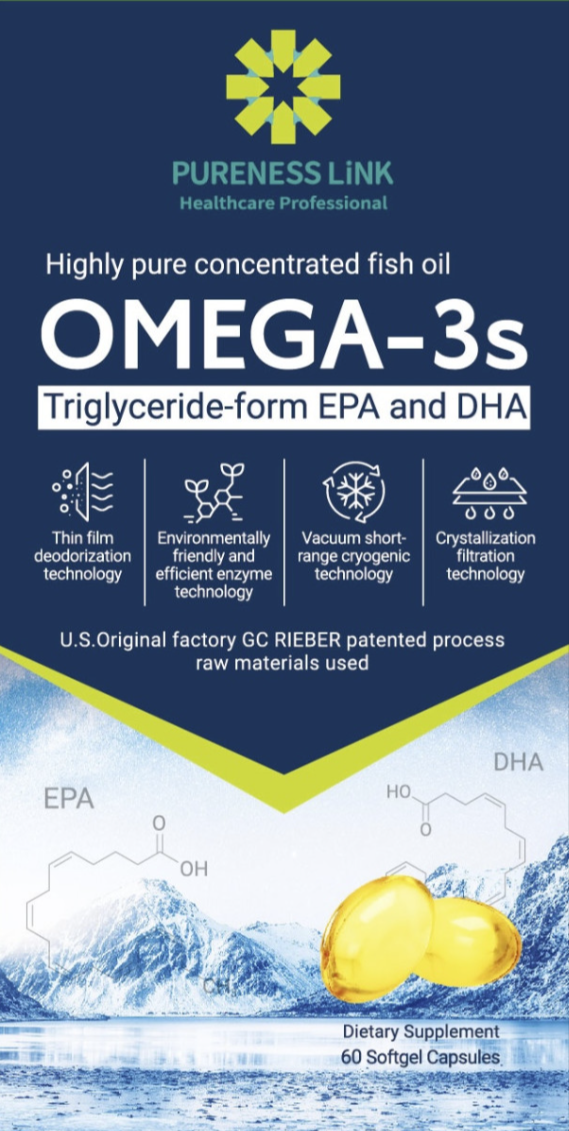
PURENESS LiNK High-Concentration Omega-3 Fish Oil Softgels
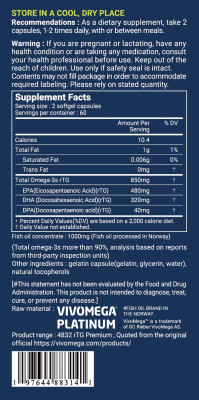
Provides 850 mg of total omega-3 fatty acids per two softgels
480 mg EPA + 320 mg DHA + 40 mg DPA
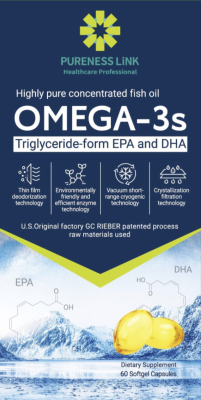
VivoMega Platinum 4832 | High-Concentration Triglyceride-Form Fish Oil | 60 Softgels
Brand Introduction | Purity, Science and Trust
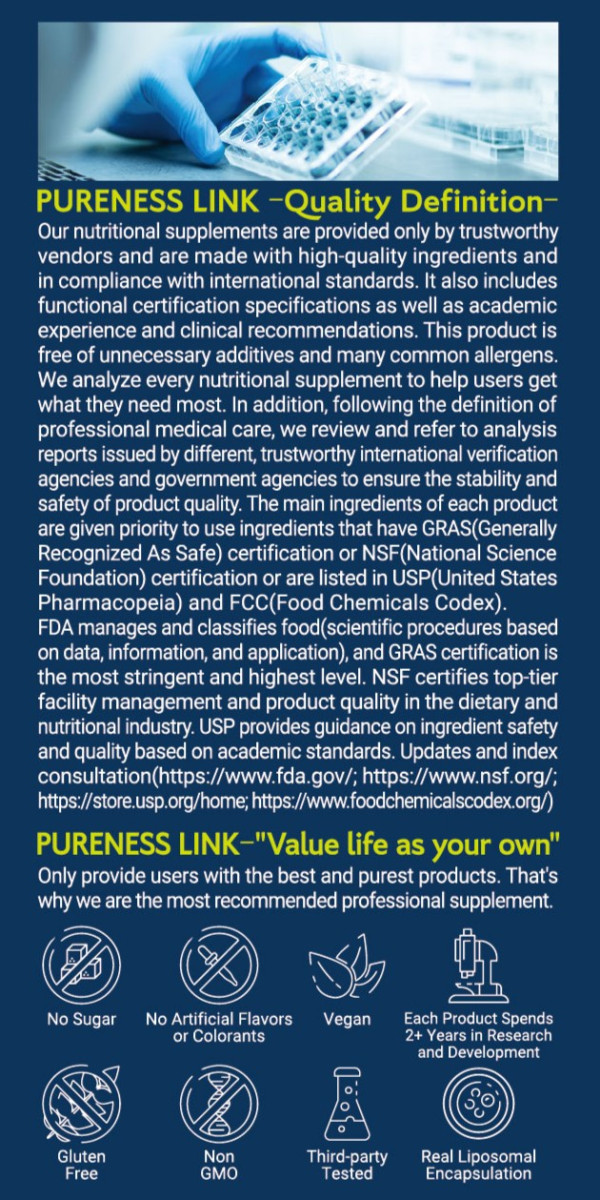
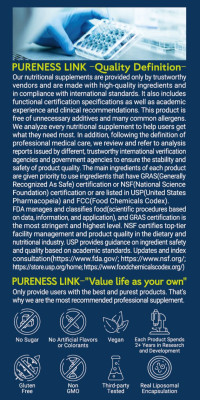
PURENESS LiNK recognizes the nutritional needs of every stage of life. Guided by our brand philosophy, “Nutrition Science Designed for Efficient Utilization,” we provide trusted nutritional options suitable for daily supplementation.
We believe that truly effective nutritional supplementation involves more than simply providing nutrients in specified amounts. It should also take into account pathophysiological mechanisms recognized in Western medicine, ingredient-specific evidence and scientific research, formulations incorporating functional food ingredients authorized by original manufacturers in Europe, the United States and Japan, and the actual user experience. From ingredient selection to product manufacturing, PURENESS LiNK maintains a professional and meticulous approach, helping consumers of different ages and lifestyles find suitable ways to meet their daily nutritional needs.
Ingredient Technology | Norwegian VivoMega Platinum High-Concentration Fish Oil
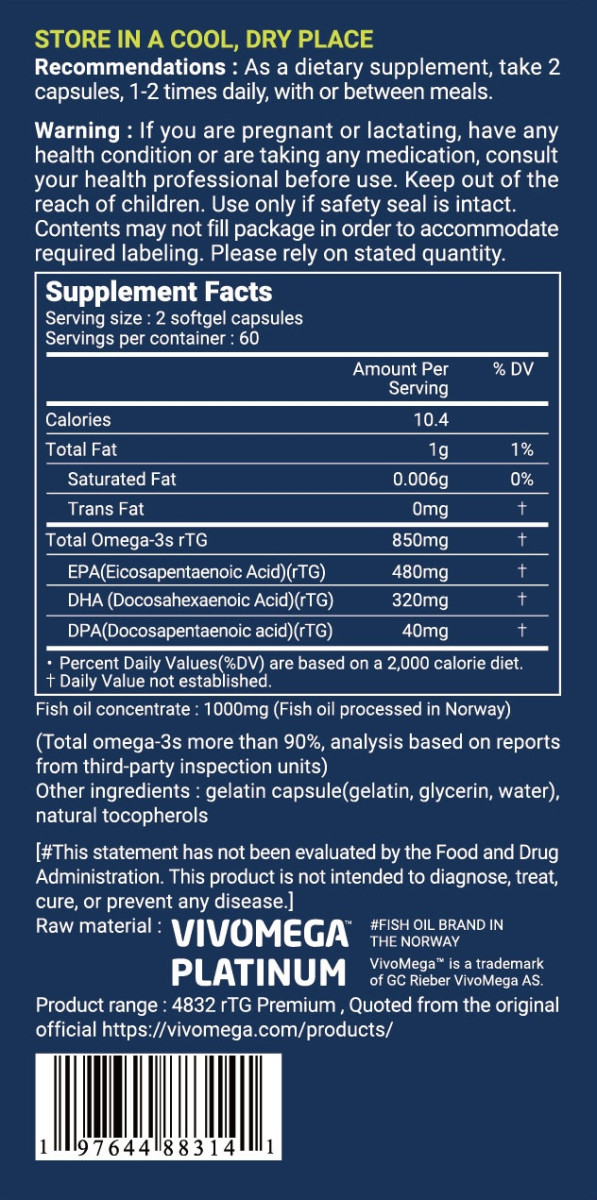
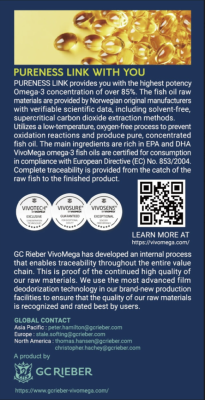
This product features VivoMega Platinum 4832 high-concentration fish oil manufactured in Norway by GC Rieber VivoMega AS. According to the product information supplied, every two softgels contain 1,000 mg of fish oil concentrate and provide 850 mg of total omega-3 fatty acids.
Each two-softgel serving provides:
- 1,000 mg of fish oil concentrate
- 850 mg of total omega-3 fatty acids
- 480 mg of EPA, or eicosapentaenoic acid
- 320 mg of DHA, or docosahexaenoic acid
- 40 mg of DPA, or docosapentaenoic acid
- Approximately 10 mg of other omega-3 fatty acids
- A combined total of 800 mg of EPA and DHA
- Natural tocopherols as antioxidants
Based on 1,000 mg of fish oil concentrate, the total omega-3 concentration is 85%, while EPA and DHA together account for 80%. Fish oil products should therefore be evaluated primarily according to the actual amounts of EPA, DHA and total omega-3 fatty acids rather than the total weight of fish oil alone.
What Does VivoMega Platinum 4832 Mean?
VivoMega Platinum is the high-concentration fish oil range produced by GC Rieber VivoMega. The designation “4832” indicates that each gram of the ingredient provides approximately:
- 480 mg of EPA
- 320 mg of DHA
The manufacturer’s current product information lists the ingredient as 4832 TG Premium and specifies 850 mg of total omega-3 fatty acids per gram. The finished-product label describes the oil as rTG. A technically cautious product description is therefore “high-concentration triglyceride-form fish oil” or “Premium Triglyceride-form Omega-3.”
Concentration, Purification and Quality Management
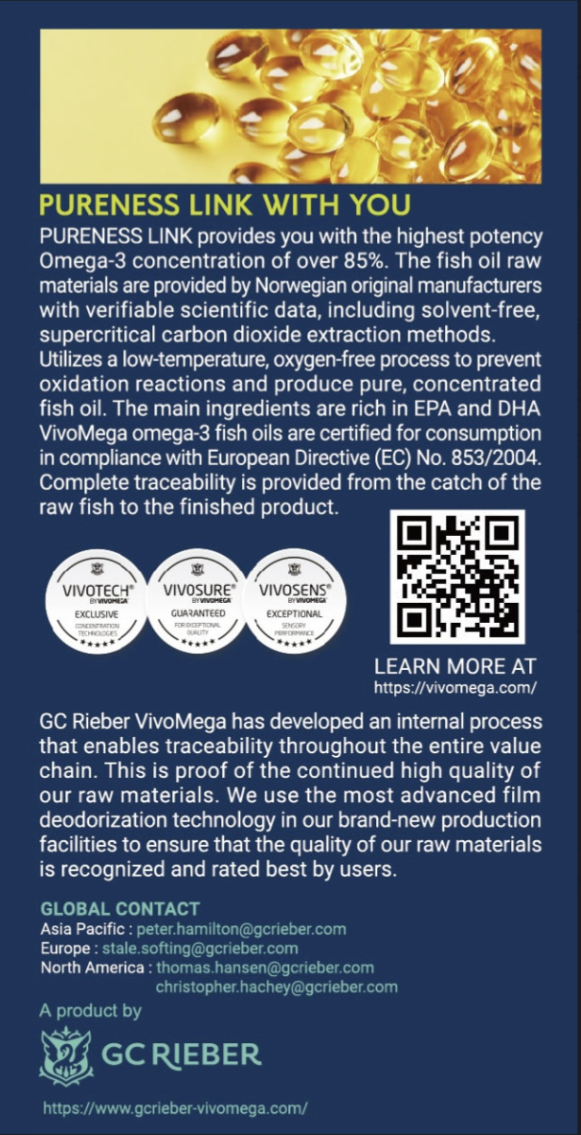
Based on the ingredient information supplied and the manufacturer’s published information, the production and quality-management features include:
- Thin-film deodorization technology to improve taste and sensory quality
- Concentration and purification under low-temperature and vacuum conditions
- Crystallization and filtration processes
- Process controls intended to limit oxidation
- Traceability from the initial catch to the finished ingredient
- Quality specifications for peroxide value, anisidine value and total oxidation, or TOTOX
- Controls for heavy metals, polychlorinated biphenyls, dioxins and other environmental contaminants
- Processing in the manufacturer’s facility in Norway
- Fish oils certified for human consumption in accordance with relevant European requirements
Fish oil contains highly unsaturated fatty acids and is therefore susceptible to oxidation when exposed to oxygen, light or heat. Appropriate purification, deodorization, antioxidant protection and sealed storage help maintain freshness and sensory quality.
Absorption and Metabolism of Fish Oil | Emulsification, Lipolysis, Chylomicrons and Tissue Utilization
EPA, DHA and DPA are long-chain omega-3 polyunsaturated fatty acids. Following consumption, they undergo lipid digestion, intestinal absorption and lipoprotein transport before being distributed to different tissues.
The overall pathway may be summarized as follows:
Softgel disintegration and mixing with the meal → emulsification of the oil droplets by bile acids → hydrolysis of triglycerides by pancreatic lipase and related enzymes → formation of free fatty acids and monoacylglycerols → incorporation into mixed micelles with bile salts → delivery to the small-intestinal brush border and uptake by intestinal cells → re-esterification into triglycerides and phospholipids → assembly into chylomicrons with ApoB-48 and other components → transport through the lymphatic system into the bloodstream → release of fatty acids through lipoprotein lipase activity → distribution to the liver, skeletal muscle, adipose tissue, brain, retina and other tissues → incorporation into cell membranes, conversion into lipid mediators, repackaging into lipoproteins or beta-oxidation.
Why Is Fish Oil Commonly Taken with Food?
Fish oil is a lipid. Taking it with a meal, particularly one containing a moderate amount of fat, stimulates bile and digestive-enzyme secretion and can support emulsification and absorption. Taking the product with food may also reduce fishy aftertaste, reflux, belching or gastric discomfort.
Actual absorption may be influenced by:
- The chemical form and actual EPA and DHA content
- The amount of fat in the accompanying meal
- Bile secretion and pancreatic digestive-enzyme function
- Intestinal absorptive capacity
- Age, health status and individual physiology
- Concurrent use of lipase inhibitors or other medicines that affect fat absorption
Triglyceride, re-esterified triglyceride, ethyl-ester and phospholipid fish oils have different manufacturing and digestive characteristics. Chemical form is one factor in product evaluation, but it does not independently determine overall quality. Effective EPA and DHA content, oxidation control, contaminant testing, storage and timing of consumption are also important.
Nutritional Roles of EPA, DHA and DPA | Cell Membranes, Lipid Metabolism and Tissue Composition
The following information describes the general nutritional science of omega-3 fatty acids. It does not indicate that this product can treat hyperlipidaemia, cardiovascular disease, eye disease, dementia, inflammatory disease or any other medical condition.
1. EPA | A Component of Cell Membranes and a Precursor of Lipid Mediators
EPA is eicosapentaenoic acid, chemically designated 20:5 n-3. EPA can be incorporated into cell-membrane phospholipids. Following physiological stimulation, some membrane EPA can be released and metabolized through cyclooxygenase, lipoxygenase and cytochrome P450 pathways.
EPA can serve as a precursor of certain prostaglandins, thromboxanes, leukotrienes and E-series resolvins. These pathways participate in normal cellular signalling, platelet responses and the restoration of tissue balance following an inflammatory response. This should not be simplified into a claim that EPA directly “eliminates inflammation” or that fish oil can replace medication.
2. DHA | An Important Component of Brain and Retinal Membrane Phospholipids
DHA is docosahexaenoic acid, chemically designated 22:6 n-3. It is highly concentrated in the membrane phospholipids of the brain, neuronal tissues and retina, where it participates in maintaining normal membrane structure and fluidity.
DHA is also a precursor of D-series resolvins, protectins and maresins. Consuming DHA increases the dietary supply of this long-chain omega-3 fatty acid, but does not mean that high-dose fish oil can prevent or reverse dementia, visual deterioration or neurological disease.
3. DPA | A Long-Chain Omega-3 Fatty Acid between EPA and DHA
DPA is docosapentaenoic acid, chemically designated 22:5 n-3. It is present in blood and tissue lipids and participates in long-chain omega-3 metabolism and membrane-phospholipid composition.
EPA, DPA and DHA can undergo limited elongation, desaturation and retroconversion in the body. The extent of this conversion depends on diet, enzymatic activity and individual physiological status.
4. Scientific Background Related to Normal Lipid Metabolism
EPA and DHA participate in metabolic pathways involving hepatic fatty-acid oxidation, lipogenesis, triglyceride synthesis, VLDL secretion and the clearance of triglyceride-rich lipoproteins.
The omega-3 products used medically to treat severe hypertriglyceridaemia are standardized prescription medicines, typically administered at a total dose of 4 g per day under medical supervision. A general fish oil supplement cannot be assumed to have the same indications or effects and should not be substituted for prescription treatment.
Suitable Users | Daily EPA and DHA Supplementation
This product is suitable for:
- People who consume limited amounts of fish and seafood
- People with unbalanced diets or limited dietary variety
- People who wish to supplement EPA, DHA and DPA
- People who prefer products that clearly state the actual amounts of EPA and DHA
- People seeking a concentrated fish oil that provides substantial EPA and DHA in fewer softgels
- People concerned about fish-oil form, oxidation control and ingredient traceability
- People seeking original Norwegian VivoMega fish oil
- People seeking a high-concentration triglyceride-form fish oil
- Middle-aged or older adults with limited fish intake who have been assessed as suitable for supplementation
- Pregnant or breastfeeding women who have been professionally advised to supplement DHA
- Whole fish also provides protein, vitamins, minerals and other nutrients. Fish oil therefore does not completely replace fish and seafood as components of a balanced diet.
Product Features
- Contains 1,000 mg of fish oil concentrate per two softgels
- Provides 850 mg of total omega-3 fatty acids per two softgels
- 85% total omega-3 concentration
- Provides 480 mg of EPA per two softgels
- Provides 320 mg of DHA per two softgels
- Provides 40 mg of DPA per two softgels
- Provides a combined total of 800 mg of EPA and DHA
- Features fish oil manufactured in Norway by GC Rieber VivoMega AS
- Uses the high-concentration VivoMega Platinum 4832 formulation
- Described on the finished-product label as rTG fish oil
- Listed by the ingredient manufacturer as Premium Triglyceride fish oil
- Uses thin-film deodorization technology to improve sensory quality
- Employs low-temperature, vacuum concentration and purification concepts
- Emphasizes oxidation, freshness and environmental-contaminant control
- Provides ingredient traceability from the initial catch to the finished product
- Contains natural tocopherols as antioxidants
- 60 softgels per bottle
Other Ingredients
- Softgel capsule: gelatin, glycerin and water
- Natural tocopherols
- This product contains fish-derived ingredients and gelatin. It is not suitable for vegetarians or vegans.
Suggested Use
- Take two softgels per serving, one to two times daily, with water. Swallow the softgels whole without chewing. They may be taken with or between meals; taking them with or immediately after a main meal is recommended to support absorption and gastrointestinal tolerability.
- Based on each two-softgel serving:
- Two softgels daily provide 850 mg of total omega-3 fatty acids and 800 mg of EPA plus DHA.
- Four softgels daily provide 1,700 mg of total omega-3 fatty acids and 1,600 mg of EPA plus DHA.
- Please follow the latest Chinese-language product label for the recommended daily intake, frequency of consumption and storage instructions. Store in a cool, dry place away from direct sunlight and heat. Keep the container tightly sealed after opening.
Precautions
- Follow the recommended serving amount. Excessive consumption provides no additional benefit.
- Do not use this product if you are allergic to fish, seafood, fish oil, gelatin or any other ingredient in the formulation.
- When taking other fish-oil, algae-oil, krill-oil or omega-3 products, consider the total daily intake of EPA and DHA from all sources.
- People taking warfarin or other anticoagulants, aspirin, clopidogrel or other antiplatelet medicines should consult a physician or pharmacist before use.
- Higher omega-3 intakes may influence platelet responses and clotting time. Discontinue use and seek medical attention if unexplained bruising, nosebleeds, bleeding gums, black stools or blood in the urine occurs.
- Before surgery, dental extraction or an invasive procedure, inform the healthcare professional that fish oil is being taken. Whether it should be discontinued and the appropriate interval must be determined individually.
- People with a history of atrial fibrillation, cardiac arrhythmia or a high cardiovascular risk should not use high-dose omega-3 supplements without medical supervision.
- Fish oil may cause fishy aftertaste, belching, heartburn, nausea, abdominal discomfort or diarrhoea. Taking it with food or dividing the daily serving may improve tolerability.
- Orlistat and other medicines that interfere with fat absorption may reduce fish-oil absorption. Consult a physician or pharmacist regarding appropriate timing.
- Pregnant or breastfeeding women, children, people with medical conditions and those taking medication should consult a physician, pharmacist or registered dietitian before use.
- This product is fish oil, not cod-liver oil. Its vitamin A and vitamin D contents should not be inferred from those of fish-liver oils.
- Do not consume softgels that are damaged, leaking or adhering to one another, or if the oil has a clearly rancid or abnormal odour.
- This product is a nutritional supplement and is not intended to diagnose, treat, cure or prevent any disease. It is not a substitute for lipid-lowering medication, anticoagulant therapy or other medical treatment.